Members
Members write their own entries. If something here is out of date, please contact us.
-
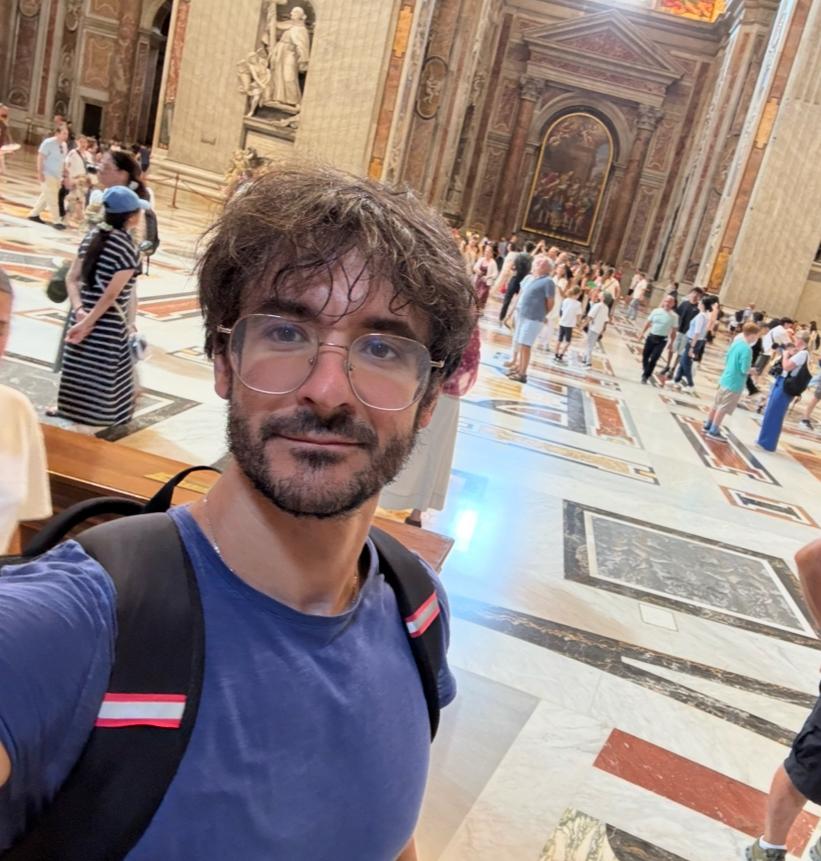
Vincenzo Amendolara
Hi, I’m Vincenzo Amendolara, a Ph.D. student in Modern Languages, Literatures, and Cultures at the University of Bologna. My research focuses on linguistic pattern and thematic cluster analysis regarding social media and the climate crisis, using a contrastive perspective across German, Italian, and English within a corpus-assisted ecolinguistics framework. I am also a Cross Linguistic Analyst in The H4rmony project, which aims to integrate eco-awareness into AI systems. Additionally, I am a researcher for the PRIN (Research Projects of Relevant National Interest) Minors on the move: Mapping forced migration from Nazism and its testimonies, georeferencing oral history with chrono-topological data.
Bilingual in Italian and German, I love hearing about others’ language identities, sharing stories and experiences by discovering how we perceive the world through our language lenses.
-
Emily-Louise Beech
Emily-Louise is a PhD student researching the role of the Welsh language in community engagement and community action groups. Her work has included collaborations with GwyrddNi, Public Map and M-SParc. Through the Public Map project, she explored the role of Welsh in how children and young people on Anglesey express what matters most to them in their local communities
Emily-Louise has also worked on the LPIP project, investigating Welsh language awareness among staff teams and how this influences the use and integration of Welsh within organisations.
-
Mel Engman
I am a language researcher and learner from the Great Lakes region of what is now the United States, and a lecturer at Queen’s University Belfast.
My research advocates for the maintenance and reclamation of Indigenous, minoritised, and displaced languages, and I am interested in developing a better understanding of the role and nature of languaging in human-land relations. Some of my published work can be found in the Modern Language Journal, Linguistics and Education, Teanga, and Language, Culture and Society.
-
Diego L. Forte
Diego L. Forte is a researcher for the Universidad de Buenos Aires and an academic consultant for the Ministry of Agriculture of Argentina. He also teaches post graduate courses in multimodality, discourse and emotion for the University of La Serena, Chile. Recent publications include:
- Ecolinguistics and the multimodal reorientation of language studies
- Interdisciplinary Approaches to Environmental Identity and Portrayal
- Global Perspectives on Language, Sustainability, and Pedagogy. An Ecolinguistic Approach
- Ecolinguistics, Social Justice and Sustainability. Voices from the Global South
-
Laura Hodsdon
I’m Associate Professor and lead of the Research Centre for Heritage, Culture & Society at Falmouth University in Cornwall, UK. My research focuses on social and cultural geographies of heritage and landscape, including intangible cultural heritage and the dynamics and ethics of participation, particularly focusing on European national minorities and cultural heritage. I focus not on heritage sites or practices in themselves so much as their role within wider contexts - cultural, social, environmental, economic - that explore equitable, ethical access to heritage.
I recently led a JPICH project RE:VOICE, with findings published in our edited volume Revoicing Intangible Cultural Heritage: Perspectives from the Margins of Europe
-
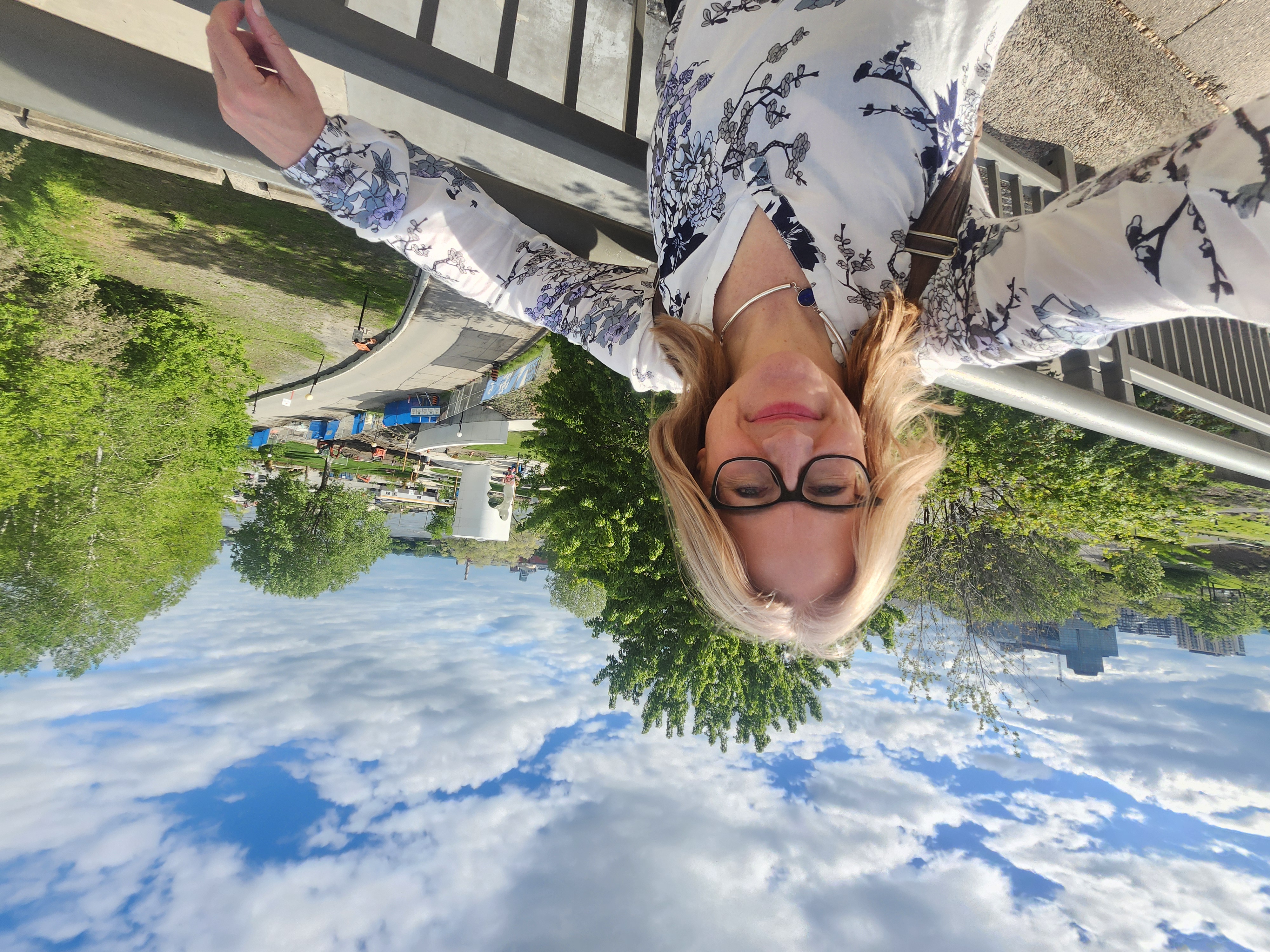
Meg Holden
I research and teach in my capacity as Professor of Urban Studies and Resources and Environmental Management at Simon Fraser University in Metro Vancouver, BC, Canada. As an interdisciplinary social scientist, planner, and pragmatic philosopher, I approach language as a way to inquire into culture together with the normative need for climate action and ecological transition.
I am the Principal Investigator of SAGA: Translanguaging and Sustainability, a Canadian Social Sciences and Humanities Research Council project aimed at studying and advancing sustainable development transitions across languages in multilingual contexts. The project’s objective is to develop and highlight language ties to urban socioecological transitions, beyond English. Indeed, language choices remain an often-neglected aspect of sustainable development strategies; based on this observation, SAGA researchers are conducting reflexive, observational, and collaborative research in English, French, Finnish, Danish, and Indigenous languages in urban contexts. This approach allows us to study how, depending on cultural differences, the implementation of urban sustainability is facilitated or hindered by linguistic interaction processes. More information about the SAGA project is available in our Green Paper, our article discussing how to mobilize translanguaging in sustainability education, and work on “match pairs” of words in multiple languages that reveal the magic of language-specific approaches to steer socioecological transition.
-
Přemysl Mácha
I am a linguistic anthropologist and a forester with an interest in the role of language in landscape perception. I am particularly interested in place names, ethnoecology, and ethnobotany. My research methods include interviews, focus groups, surveys, content and discourse analyses, free-listing, statistics, non-destructive archaeology, plant inventories, and GIS.
I have done research in Mexico, New Mexico (USA), Czechia, and Hungary. My current research is mostly based in Czechia.
-
Rebecca Madlener
My research focuses on the semantics of Scottish Gaelic landscape vocabulary. Specifically, my PhD research studies the Gaelic coastal landscape vocabulary, synchronically and diachronically, by bringing together evidence from different sources (linguistic fieldwork, place-names, historic texts).
The aim of my research is to gain a better understanding of what landscape vocabulary can tell us about how past and present Gaelic speakers perceive the natural environment and how this perception has changed over time as the way in which people live in and with the landscape has changed.
-
Franz-Benjamin Mocnik
Franz-Benjamin Mocnik is Professor of Space and Place in the Information Sciences at the University of Salzburg. His work sits at the intersection of human geography, information science, and philosophy, examining how places are conceptualized, represented, and communicated, such as through maps, texts, and everyday discourse. His interests include how climate change effects on places can be communicated.
-
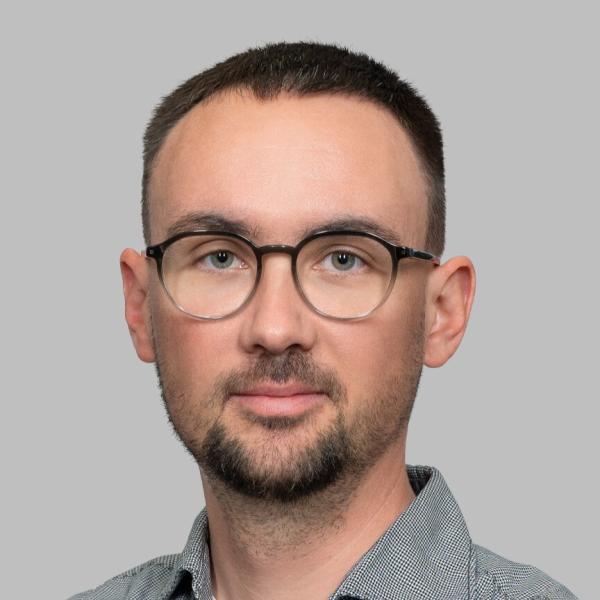
Philipp Striedl
Studying the relationship between environmental and linguistic sustainability has been motivating my research. Currently, I am working on my project Investigating cognitive diversity through landscape language. Through ethnographic fieldwork, I document and analyze how Arabic and Tashelhit speakers in Morocco talk and think about landscape. I mainly focus on linguistic structures that speakers use to carve up landscape e.g. into valleys, hills and mountains, and on the strategies that they use to make sense of their geographic environment.
In 2024, I organized the first edition of the ILANSCO (Interdisciplinary perspectives on landscapes in language, society and cognition) conference series with colleagues in Zurich that gives a platform to research close to the LCN topics.
-
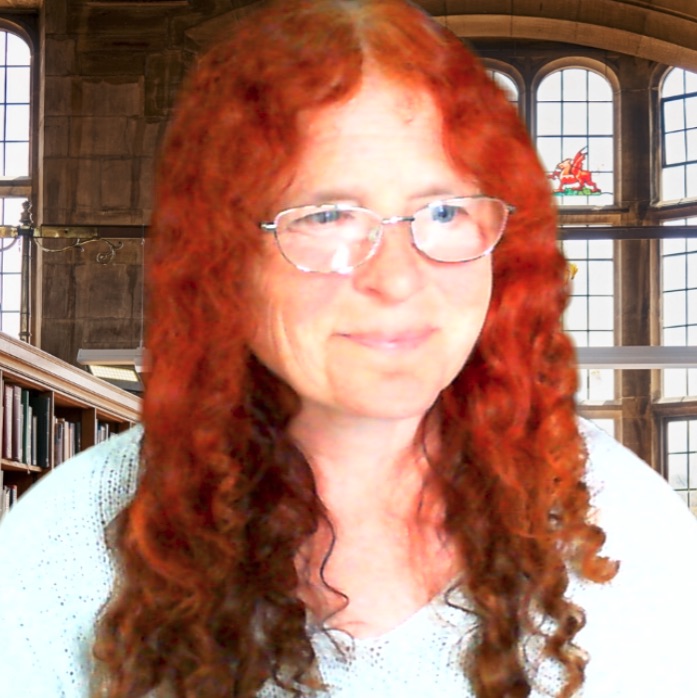
Thora Tenbrink
As a discourse analyst, I am interested in how people use language to express and exchange their thoughts, and what role the language itself plays in relation to people’s thinking. My focus is on intersections between place attachment, climate change, and community engagement, and I’m looking at links between the Welsh language and the natural environment.
I believe that language as a carrier of intangible cultural heritage plays a central role for people’s identity and place attachment, motivating them to act to protect the local environment. Having seen this multiple times in Wales, I’m very interested in learning how this works across languages.
-
Yael Mishani Uval
Dr. Yael Mishani-Uval is a linguist whose research explores philosophical, social, and cultural questions through everyday language use, with particular interest in the relationships between language, place, and belonging. She received her Ph.D. from Bar-Ilan University’s Interdisciplinary Program for Hermeneutics and Culture, with a dissertation on the linguistic construction of meaning in life.
She is currently a Postdoctoral Fellow at Dartmouth College, where her research examines perceptions of place attachment in the context of the Israeli-Palestinian conflict, comparing how residents of West and East Jerusalem/Al-Quds construct relationships to place through Hebrew and Arabic.
-
Lisa Verhasselt
Lisa Verhasselt is a Research Associate at LISER, where she serves as Principal Investigator on LISER’s side of the Horizon Europe AntifragiCity project, focusing on resilient, socially acceptable urban mobility. In this role, she leads the design, coordination, and implementation of citizen participation components, including citizens’ assemblies and living labs across multiple European demonstration sites, working at the intersection of urban governance, social acceptability, and mobility transitions. She holds a PhD in Political Science from the University of Luxembourg, where her research examined deliberative democracy in multilingual contexts. Her work makes original theoretical and empirical contributions to understanding how linguistic diversity shapes the inclusivity, authenticity, and consequentiality of deliberative mini-publics.
A second paragraph if you want one, perhaps about what you would like to hear from other people about.
-
Daniela Francesca Virdis
Daniela Francesca Virdis is an associate professor of English Language and Translation at the University of Cagliari. She is the Chair of the Poetics and Linguistics Association (PALA) for the years 2025-2027 and a member of the International Ecolinguistics Association (IEA) advisory group.
She is the author of the book Ecological Stylistics: Ecostylistic Approaches to Discourses of Nature, the Environment and Sustainability (2022) and a co-editor of The Bloomsbury Handbook of Ecolinguistics (2026). She is the editor of Ecostylistics: Texts, Methodologies and Approaches (a special issue of the Journal of World Languages) (2022) and a co-editor of the books Language in Place: Stylistic Perspectives on Landscape, Place and Environment (2021) and The Stylistics of Landscapes, The Landscapes of Stylistics (2017).
-
Alasdair Whyte
Dr Alasdair C. Whyte is a Lecturer in Celtic Onomastics at the University of Glasgow in Scotland. His current research focusses primarily on the place-names of his native island of Muile ~ Mull and the surrounding area but his work includes a range of other aspects of Gaelic, Celtic and Scottish Studies, especially ecology, folklore, linguistics, literature and song.
Publications include Maim-slè (Theatre Gu Lèor, 2021), a book of original and traditional poetry and prose in Gaelic and English simultaneously exploring the linguistic and cultural emergency regarding Scottish Gaelic in Muile ~ Mull and the climate emergency.